Website design & development cost in 2026 [+ Free Calculator]
25 min read
January 10, 2026
Website design & development
Ognjen Marinkovic
8 min read
May 4, 2025
Most SaaS founders burn $10,000-$50,000 on websites with features nobody uses. Agencies push extra pages, complex builds, and slow revision cycles that drain your budget. The fix: ship a lean landing page, iterate fast, and spend savings on growth. See typical website costs here.
SaaS website design hits most startup budgets hard. You know a quality site builds credibility and drives conversions. But spending more doesn't mean better results.
Most SaaS startups overpay for their website. They waste money on things that don't matter.
This post breaks down where the money goes and how to avoid the traps.
Building a startup website should be simple. Yet costs spiral fast. A SaaS website can run a few thousand or hit six figures.
Four reasons:
Let's break each one down.

Founders often try to launch with everything: homepage, product pages, blog, docs, even a forum. They feel pressure to "look legit" from day one.
You might spend $20,000-$50,000 before you even have paying customers. Founders build fancy blogs nobody reads. More pages = more design, more dev, more cost.
Start with a focused landing page. One page that clearly explains your offer. This validates your idea and captures leads.
Add pages later when you see traction. That's how you avoid wasting money on stuff that will change anyway.
Lean MVP:
Ship fast. Add more when users ask for it.
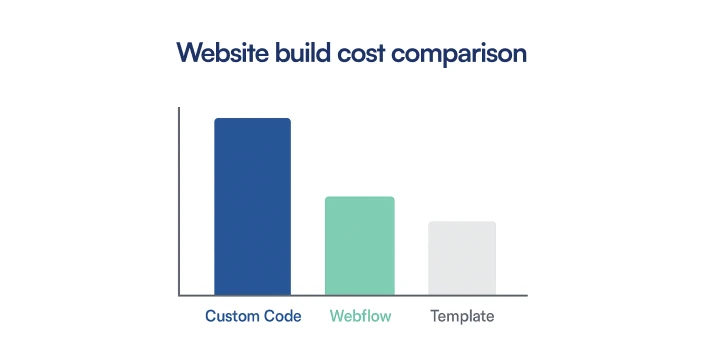
Some founders treat the marketing site like the product. They add custom calculators, complex sign-up flows, or heavy integrations.
A custom calculator sounds nice but rarely drives signups. Coding a custom CMS theme for a 5-page site? Waste. You'll pay $10,000+ upfront and more when it breaks.
Keep it simple. Your site should:
That's it.
Use Webflow or WordPress instead of hiring devs to hand-code your marketing site. Focus developer time on your actual product.
By cutting the bloat, you save $5,000-$15,000 and ship 3x faster.

Even a small site gets expensive when the process is slow. This happens when agencies add layers: account managers, project managers, strategists.
Each layer costs you time and money. You pay for the bloat, not just the work.
You pay an agency $15,000 fixed price. Then every change costs extra. Or the timeline drags from 4 weeks to 4 months because of endless revisions.
Agency bloat:
Be clear from the start:
Work fast:
Consider retainer services:
Retainer-based services offer unlimited revisions with no added fees. For example, Designow's monthly retainer delivers updates every 48 hours at $2,999/month.
No account managers. No workshops. Just fast execution. You work directly with the founder.
Move quickly. Give fast feedback. Trust your designer. That's how you stay on budget.

Launch only what you need. One great landing page or a simple 4-page site:
Add more later when you see traction.
If your copy is weak, even the most beautiful site won't convert. Good messaging beats fancy design.
Explain:
Clear CTAs convert. Design just makes them look good.
Builders like Webflow cut dev time by 70%. You don't need a full engineering team to get SEO, responsive design, and easy edits.
Skip agencies that treat your site like a corporate rebrand. Find someone who:
We ship in 2-4 weeks, not 2 months. No account managers. No 6-month discovery. Just execution.
Launch. See what works. Adjust.
Because you started lean, you still have budget to improve based on real user feedback. That's smarter than building everything upfront and hoping it works.
Most SaaS founders overpay because they don't know a better way. Now you do.
The traps:
❌ Building too many pages too soon
❌ Adding features nobody needs
❌ Paying agencies for bloat
The fix:
✅ Build lean
✅ Focus on results
✅ Ship fast, iterate faster
Want a high-impact site without draining your budget? Book a free call with Designow. We'll show you how to get a conversion-focused site for $1,499-$2,499 (one-time) or $2,999/month (unlimited).
Let's ship it.
Most SaaS startups waste $20,000+ on agencies with bloat and slow timelines. Smarter approach: start lean with a landing page ($1,499-$2,499), validate fast, iterate. For ongoing needs, retainer at $2,999/mo. Book a call to launch in 2-4 weeks.

They build too many pages early, add features they don't need, and pay for slow agency processes with account managers and endless revisions.
Start with a single landing page or simple 4-page site. Add pages after you validate and see traction.
Custom calculators, heavy integrations, and complex CMS setups raise upfront cost to $10,000-$20,000 and break later, adding repair fees.
Long agency timelines and endless change requests add billable hours. A 4-week project becomes 4 months.
A lean MVP site: $1,000-$5,000. Full site: $3,000-$10,000. Agency builds: $10,000-$50,000+.

Get everything you need in one place, from branding to Webflow. Fast, flexible, and built for startups.